Historic First: Beijing Channels $54bn State Recapitalisation into Five Systemically Important Insurers
Historic First: Beijing Channels $54bn State Recapitalisation into Five Systemically Important Insurers
Beijing's special-treasury-bond injection – previously reserved for the big banks – now reaches China Life, PICC, China Taiping, Sinosure and China Re, signalling a strategic shift in how the state views the insurance sector's role in financial security and growth.
Published for the insurance industry – 9 September 2026
China's Ministry of Finance has unveiled a coordinated capital injection of roughly 357 billion yuan (about US$54 billion) into state-owned financial institutions – and for the first time, the recapitalisation framework built on special treasury bonds has been extended to five systemically important insurers.
The move, disclosed by the companies between 6 and 8 September, marks a watershed for the country's insurance sector. Prior rounds of special-bond-backed capital support were reserved almost exclusively for large state-owned commercial banks; this round deliberately widens the net to include underwriters, reinsurers and the country's export credit agency.
The five recipients and the insurer tranche
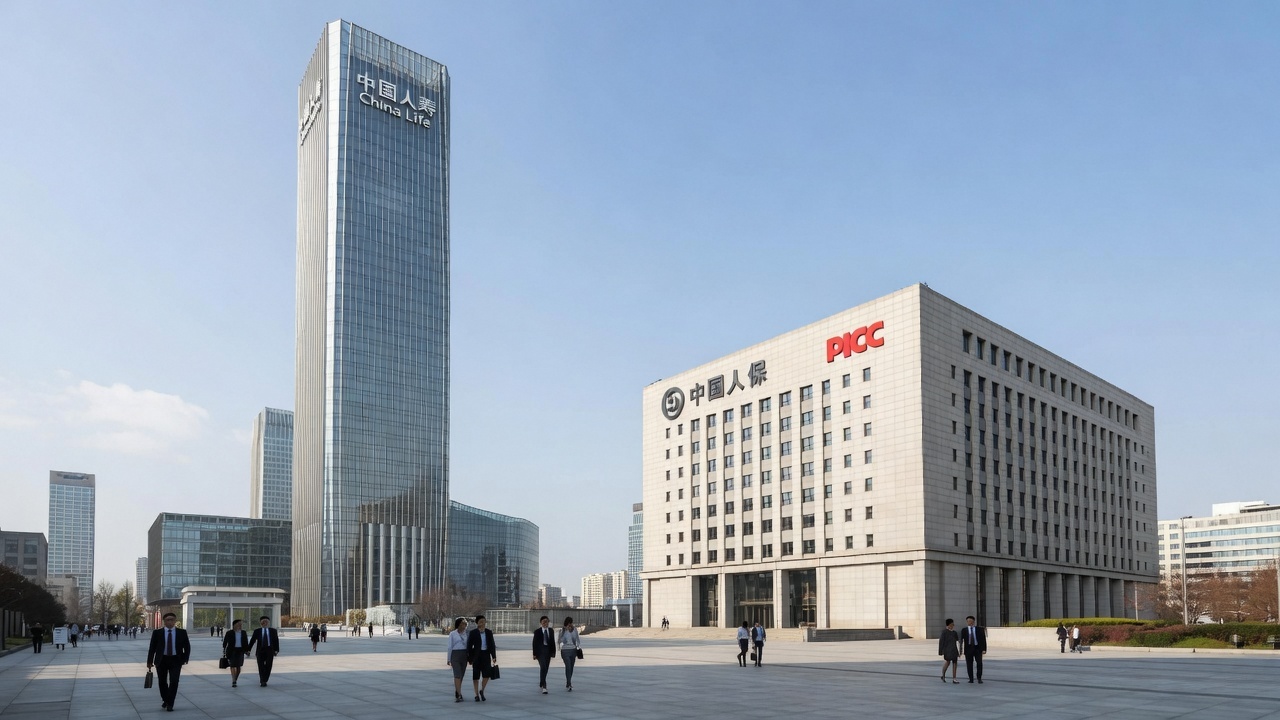
Of the 357 billion yuan total, approximately 70 billion yuan has been allocated to the insurance cohort:
- China Life Group (中国人寿) – the country’s largest life insurer and a pillar of the state’s pension and savings architecture.
- PICC (中国人保) – the dominant property & casualty insurer and a key provider of commercial and agricultural cover.
- China Taiping (中国太平) – the centrally managed insurer with a significant Hong Kong and overseas footprint.
- Sinosure / China Export & Credit Insurance Corporation (中国信保) – the state export credit agency, sitting at the front line of China’s trade exposure.
- China Re (中国再保) – the national reinsurer, which acts as a shock absorber for the entire domestic market.
The remaining funds are understood to be split among large state-owned commercial banks, which had already been earmarked for 300 billion yuan of special-bond replenishment in the March Government Work Report. The insurers' inclusion goes beyond that earlier plan.
A first: special treasury bonds reach insurers
Chinese financial media have been unambiguous about the novelty: this is the first time special treasury bond (特别国债) recapitalisation has been extended to insurance institutions. Beijing's rationale is framed around financial security – the five insurers are described as “systemically important” to the stability of the wider financial system.
The mechanics follow a dual path of “capital injection plus private placement” (注资+定增): the Ministry of Finance injects core capital via special bonds, complemented by targeted private placements that strengthen capital buffers without diluting state control. The result is a durable improvement in solvency headroom – precisely the kind of buffer insurers need as they absorb rising claims, expand into new lines, and reposition their balance sheets under China Risk Oriented Solvency System (C-ROSS) rules.
Why now: an export shock and weak credit demand
The injection is best read as a calibrated stimulus, not a rescue. Beijing is seeking to sustain growth amid two headwinds:
- An export shock – with trade demand softening, Sinosure’s inclusion is telling: the export credit agency is being capitalised precisely so it can underwrite more trade finance, guarantee more orders, and cushion exporters against payment and political risk.
- Weak credit and loan demand – households and corporates remain reluctant to borrow, so the state is turning to long-horizon institutional capital – insurers and their 20-trillion-yuan investable pool – to channel funds into infrastructure, strategic industries and the real economy.
By strengthening insurer capital bases, Beijing effectively creates more risk appetite at the margins: more capacity for infrastructure debt, more willingness to hold longer-duration assets, and more headroom for Sinosure to back a beleaguered export sector.
What it means for the insurance market
- Solvency headroom: expect C-ROSS solvency ratios to improve visibly across the five names, freeing capacity for underwriting and investment.
- Export credit capacity: Sinosure’s enlarged capital base signals an aggressive push to support exporters navigating tariff and geopolitical disruptions.
- A signal to second-tier players: if special-bond support can reach insurers, the bar for “systemically important” status matters more than ever – and smaller state-linked carriers will position themselves accordingly.
- State control preserved: the dual-path structure ensures the Ministry of Finance retains control while raising capital – no dilution of state ownership, no loss of strategic direction.
Analyst read
Observers note the total is “smaller than expected” relative to some market chatter, underscoring Beijing's preference for restraint over splash. But the composition tells a deeper story: by breaking the bank-only tradition, the state has formally elevated insurers to instruments of national financial policy – not just risk-takers, but balance-sheet tools of the state's growth agenda.
For the insurance industry, the message is clear: capital is coming, but it comes with strategic strings attached.
For follow-up coverage: look for the exact split of the 70-billion-yuan insurer tranche, the timetable for private placements, and whether second-tier state insurers will be included in future rounds.