
When risks start to compound
When risks start to compound
In the textbook version of this industry, the world is a bag of independent events. A warehouse fire in Leeds has nothing to do with the euro-dollar rate, and the euro-dollar rate has nothing to do with the price of gas in the Gulf. The actuary adds up the risks, assumes they do not talk to each other, and the law of large numbers does the rest.
Then there is the week we just had. France contracted by 0.2% in the third quarter, its second consecutive decline, and S&P cut the outlook on its sovereign rating to negative. British household energy bills are set to rise 26% in January because of gas prices pushed up by the war with Iran. Norse Atlantic filed for bankruptcy and named fuel costs from that same war as the main reason. Mines in the Strait of Hormuz are still closing shipping lanes. Almost a million people on America's east coast spent Thanksgiving without power after historic snowstorms. Taiwan is growing at its fastest pace in nearly fifty years, almost entirely on chips and AI infrastructure.
Each of those stories has its own byline. On an insurer's balance sheet they arrive as one event.
The promise that statistical independence made
Modern insurance rests on a three-letter assumption: iid, independent and identically distributed. Claims are separate draws from the same distribution. The Poisson process, the workhorse for frequency, assumes that the probability of an event in the next interval does not depend on what happened in the previous one. That is memorylessness, and it is a beautiful property. It makes premiums computable and reserves defensible.
It is also a description of a world that has stopped cooperating. When one shock raises the probability of the next, you are no longer in Poisson territory. You are in something closer to a self-exciting process, where each incident feeds the next, which is exactly the mathematics insurers now meet in cyber and in catastrophe modelling under the name of Hawkes processes.
The sociologist Charles Perrow gave the older version of this argument a name in 1984: normal accidents. In systems with high interactive complexity and tight coupling, catastrophic failure is not a rare deviation. It is a property of the architecture. Perrow was writing about nuclear plants and air traffic control. Read him today next to a supply chain that runs on one Taiwanese fab and one shipping lane, and the fit is uncomfortable.
Adam Tooze's polycrisis says the same thing from the direction of history. Crises do not queue. They overlap and modify each other, so the second one is never the first one repeated.
The deterministic shadow
Here is where the argument gets stranger, and where I have to be careful, because it is easy to overclaim.
Physics does not know whether randomness is fundamental. The Copenhagen reading says it is. Bell's theorem and the experiments that followed rule out local hidden variables, which kills the comfortable idea that every coin has a hidden face we simply cannot see. But they do not rule out determinism as such. Superdeterminism, defended by Sabine Hossenfelder among others, keeps a fully deterministic universe and pays for it by giving up measurement independence, the assumption that the settings of a measuring device are statistically free of the thing being measured. Gerard 't Hooft's deterministic interpretations make a similar trade.
I am not going to tell you that physics has proved that randomness does not exist. It has not. That debate is open. What I will tell you is that both escape routes from randomness are bad news for the iid assumption. If the world is deterministic, then events have causes, and causes connect. If randomness is only our ignorance, as Laplace and later Poincaré suggested, then events look independent only until our data gets good enough to see the threads.
Either way, the operational conclusion is the same. Reality does not hand out isolated coin flips. It hands out correlations we have not measured yet.
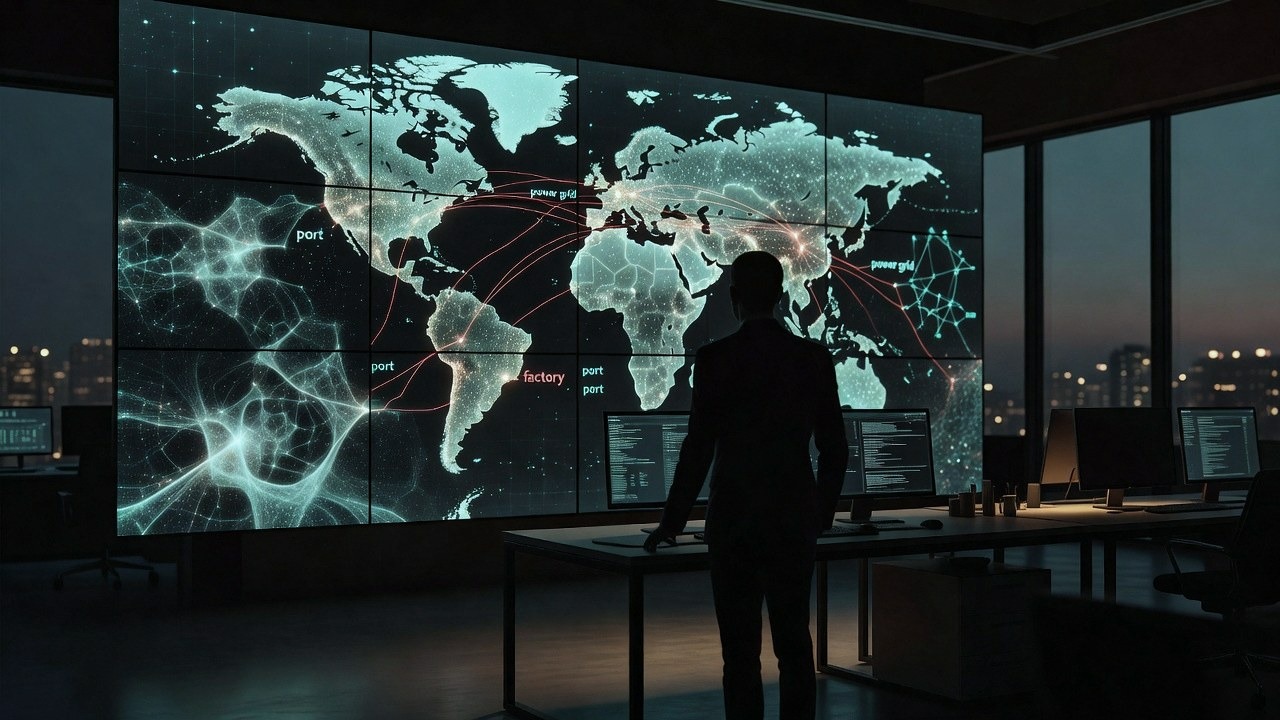
For an economist, this is the uncomfortable part. The independence assumption was never a description of nature. It was a computational convenience that happened to work while shocks were small and local. The polycrisis is the moment the convenience expires.
The arithmetic stops working
This is not philosophy. It attacks the premium directly.
The law of large numbers says that as you add policies, the average loss converges to the expected loss and the variance of the portfolio falls. That is the mathematical justification for selling ten thousand small risks instead of one large one. It holds when claims are uncorrelated. Raise the correlation and the variance stops falling, no matter how many policies you write. At the limit, adding policies adds exposure without adding diversification. You are no longer an insurer. You are a leveraged bet on one scenario.
The tails get worse faster than the middle. With strong dependence, losses do not average out; they arrive together. Value at risk loses subadditivity, which means the risk of two books combined can exceed the sum of their separate risks. A capital model built on a correlation matrix of Pearson coefficients, as the Solvency II standard formula is, assumes that those coefficients are stable. In a real crisis they converge toward one. Tail dependence is precisely the regime the standard formula is weakest in.
Reinsurance used to be the answer, and it still is, until it is not. The whole business model rests on geographic and sector arbitrage: a Florida hurricane does not correlate with a German flood. Clash cover exists for the case where it does. What happens when marine, cyber, property, credit and directors and officers all receive claims from the same origin? Reinsurers do what any rational seller does when the product becomes correlated: they raise the price, tighten the terms, or leave. Capacity does not disappear because capital vanished. It disappears because the capital can no longer be diversified.
Anatomy of a compounding week
Take the headlines seriously, one at a time, and watch them connect.
France first. A sovereign outlook cut is not an insurance claim. But European insurers hold French government paper in their reserves. A weaker sovereign means weaker assets backing the same liabilities, and it arrives at the same moment as a recession that trims premium income. Asset and liability sides move in the same direction, which is the one direction a balance sheet cannot absorb.
Then energy. A 26% bill increase in the UK is a cost of living story until you notice that the same gas market sets the price of the shutdowns that produce business interruption claims. Add a million people without power in the United States after a snowstorm, and the property and BI lines start to see the same event from two entrances. The grid is not a background condition. It is an insured asset under stress.
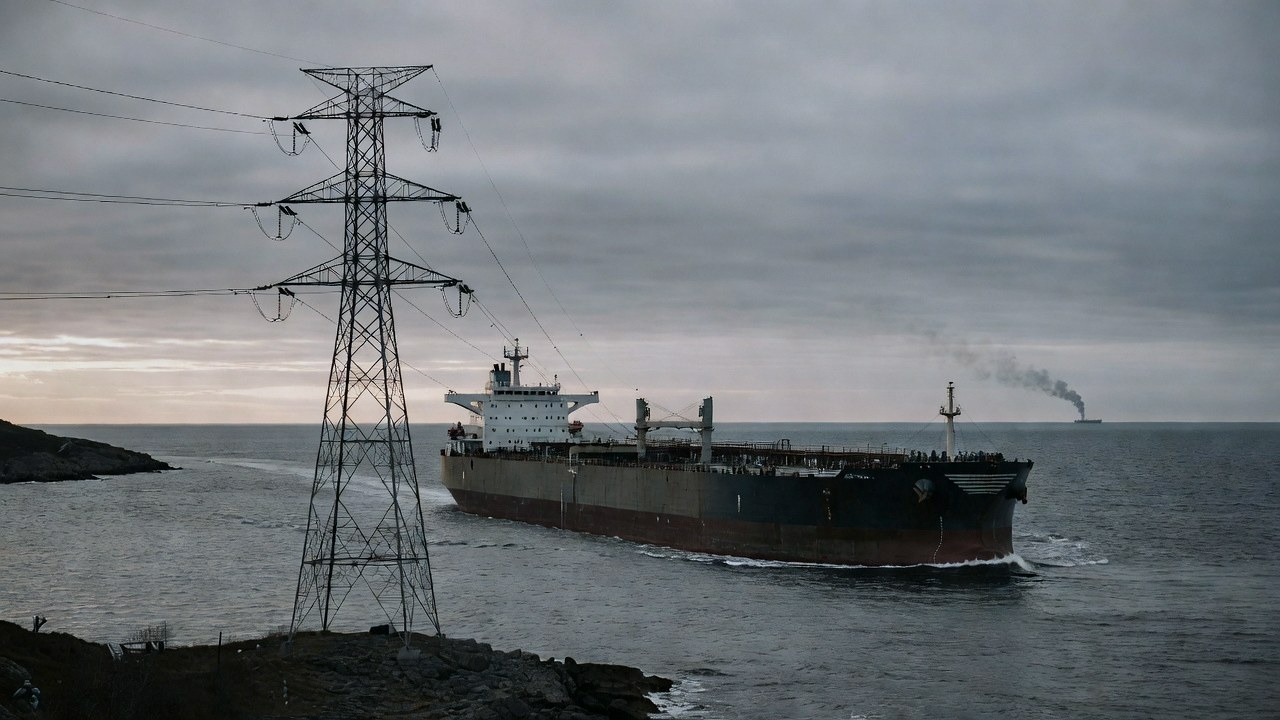
Then the Gulf. Mines in Hormuz turn into a marine hull and cargo problem within days, then a fuel price problem, then an airline solvency problem, then a trade credit and D and O problem. Norse Atlantic is the visible edge of that chain. The invisible part is every supplier waiting to be paid by a carrier that will not fly tomorrow.
Then Taiwan and AI. An economy growing at a record pace on a single sector is a concentration risk dressed as a success story. One blockade, or one court ruling in the OpenAI and Apple dispute over trade secrets, and the same legal uncertainty that hits a model provider runs through every company that built on top of it. Cyber, D and O, and technology errors and omissions policies all reference the same underlying exposure.
None of these are exotic scenarios. They all happened within days of each other.
More data, or a different question
So: does the answer lie in much bigger datasets and new predictive systems?
Partly, and I say that as someone who spends her working life around large economic datasets. More data helps with frequency. Telemetry from connected buildings, real time shipping data, satellite imagery of ports, claims text mined for early warning: all of that shortens the lag between an event and its recognition. Causal graphs and network models do better than correlation matrices, because they encode direction and mechanism. Agent based simulation can explore cascades that history has not yet produced.

But there is a ceiling, and it is not a data ceiling. It is an epistemic one. Lorenz showed that deterministic systems can be unpredictable because of sensitivity to initial conditions. Tight coupling means small errors amplify through the network. Computational irreducibility means that for some systems the only way to know the outcome is to run them, which is another way of saying you cannot precompute the future. If everything is subtly correlated with everything, which is what superdeterminism would imply, then no sample is truly independent, and adding observations does not buy you the independence you need. It buys you a better description of the past.
This is the trap I want to flag. It would be easy, and wrong, to end this article by saying that better models and bigger computers will let insurers predict everything. That is science fiction with an actuarial accent. The honest conclusion is the opposite. The more connected the world turns out to be, the less of it is predictable, and the more of it is simply correlated.
The uninsurable frontier
So where does that leave the industry? Not with a formula. With a choice.
One path is de-risking. Exclusions, tighter wording, faster repricing, exit from lines where correlation cannot be priced. It is rational for each company and corrosive for the system, because it produces a protection gap exactly where households and firms need cover most. A market that only insures the uncorrelated parts of the economy is not an insurance market. It is a subscription to good news.
The other path is harder and more interesting. Insurers stop selling the promise of prediction and start selling capital for adaptation. Parametric triggers that pay on a measured threshold rather than a claims adjustment. Index based covers for correlated risks. Public private pools for the tail that no private balance sheet should carry alone. Continuous repricing instead of an annual ritual. Balance sheets strong enough to hold the correlated version of the tail, not just the independent one.
Will the industry survive the new reality? Most of it will, in some form. The question is whether it survives as the institution that absorbs shocks, or as the institution that defines them out of the policy and leaves the bill with the taxpayer.
Can chaos be modelled? In pieces, for a while, with luck and good data. Not in full, and not in time to price it before it happens.
If every policy in a global portfolio is a transmission channel for the same shock, then what exactly is an insurer selling? That is not a rhetorical flourish. It is the underwriting question of the decade, and nobody has answered it yet.